Slip and Fall Claims at Miami Grocery Stores: Proving Store Negligence
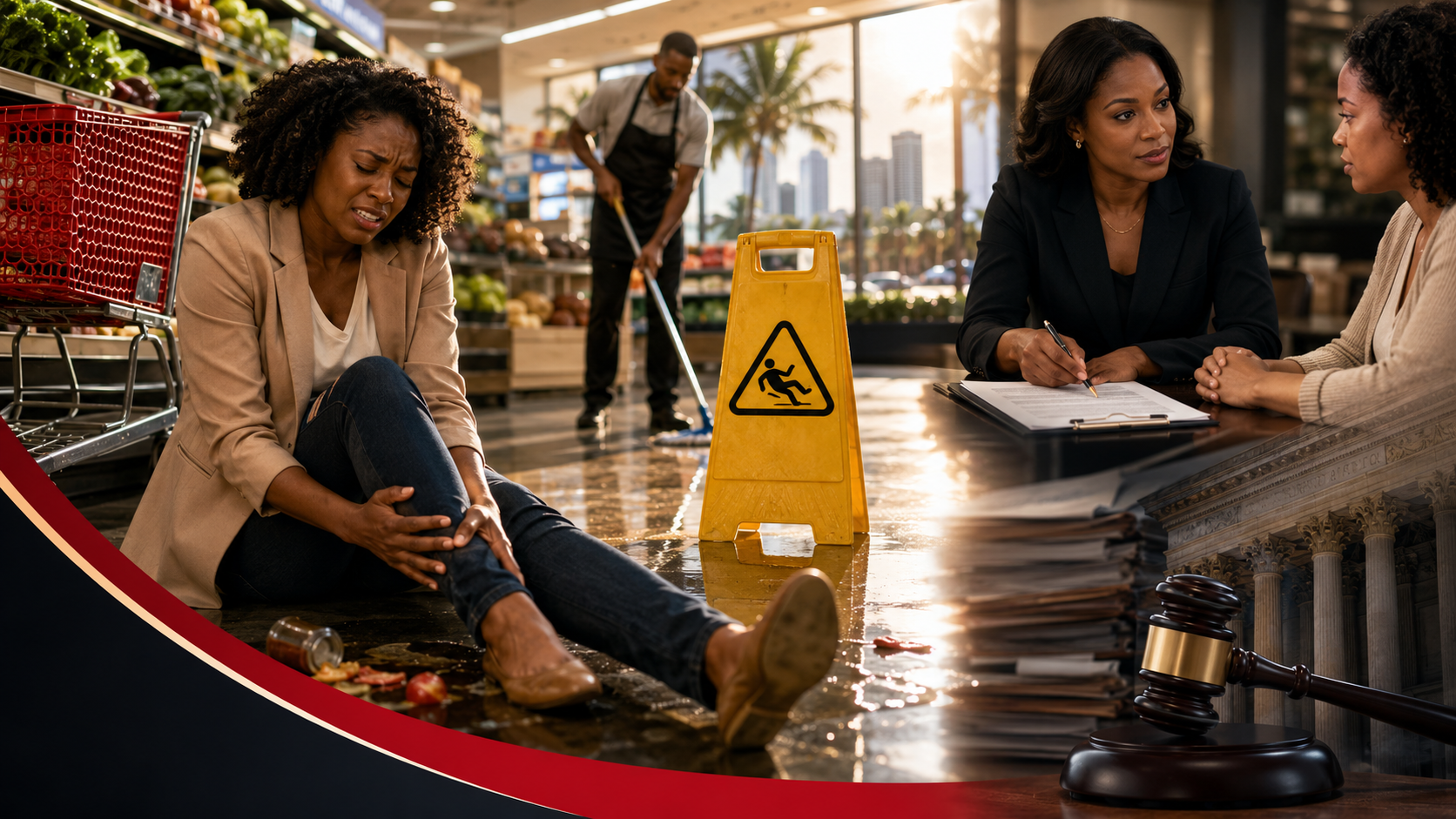
Grocery stores are supposed to be one of the safest, most routine stops in a person's week. But between wet produce aisles, freshly mopped floors, and merchandise stacked in busy walkways, Miami grocery stores are also one of the most common settings for slip and fall injuries. When a customer is hurt because a store failed to keep its premises reasonably safe, Florida law allows that customer to pursue compensation — but only if they can prove the store was negligent. That single requirement is often the difference between a successful claim and a denied one.
Why Grocery Store Falls Are So Common
Grocery stores create a unique combination of hazards that many other businesses don't. Produce sections are misted or hosed down throughout the day, ice from seafood and frozen food displays melts onto tile floors, and spilled liquids from broken jars or leaking packaging can go unnoticed for long stretches during busy shifts. Add in Miami's frequent rain, which customers track in on shoes and carts, and floors can become dangerously slick without any obvious warning sign.
Beyond wet floors, grocery stores also present tripping hazards: pallets left in aisles during restocking, floor mats that bunch or curl, uneven transitions between flooring types, and merchandise displays that block sightlines. Any of these conditions can cause a serious fall, and any of them can form the basis of a legitimate negligence claim.
The Legal Standard: What "Negligence" Actually Means
Under Florida law, a grocery store owes its customers a duty of reasonable care to maintain safe premises. This doesn't mean the store is automatically liable every time someone falls. Instead, an injured customer must generally prove several elements to establish that the store was negligent:
1. The store had actual or constructive knowledge of the dangerous condition. This is often the most contested part of a Florida slip and fall case. Florida Statute 768.0755 specifically requires that in cases involving a "transitory foreign substance" — like a puddle, a spilled drink, or a dropped grape — the injured person must show the business had actual knowledge of the hazard, or that the condition existed long enough that the store should have known about it through the exercise of ordinary care.
2. The store failed to remedy the hazard or warn customers about it. Even if a store didn't create the hazard, it can still be liable if employees knew, or should have known, about the danger and failed to clean it up, block it off, or post a warning sign within a reasonable amount of time.
3. The hazard directly caused the fall and the resulting injury. The injured person must connect the dots between the dangerous condition and their specific injury, not just show that a hazard existed somewhere in the store.
This "notice" requirement is what separates Florida slip and fall law from a simple assumption that stores are always at fault. A customer who slips on a spill that occurred moments earlier, with no employee aware of it, may have a much harder case than one who slips on a puddle that had clearly been sitting for an extended period — evidenced by dirty footprints tracked through it, a wet floor sign nowhere in sight, or surveillance footage showing the spill existed for twenty minutes before anyone addressed it.
Building the Evidence That Proves Negligence
Because notice is so central to these claims, evidence gathered immediately after a fall is critical. Some of the most valuable evidence in a Miami grocery store slip and fall case includes:
- Surveillance footage. Most grocery stores run continuous video recording throughout the store. This footage can show exactly how long a hazard existed, whether employees walked past it, and whether any cleanup or warning signage was in place before the fall.
- Incident reports. Florida grocery chains typically require employees to complete an internal incident report when a customer is injured. These reports can include employee statements made close in time to the event, which are often more reliable than memories recalled months later.
- Photographs of the scene. Photos taken immediately after the fall — showing the substance on the floor, the lighting, the absence of warning signs, and the surrounding area — can be powerful evidence that's impossible to recreate later once the area has been cleaned.
- Witness statements. Other shoppers or employees who saw the hazard, or who saw the fall itself, can corroborate how long the condition existed and how the store responded.
- Maintenance and inspection logs. Many stores keep records of when floors were last mopped, inspected, or checked for hazards. Gaps in these logs, or evidence that inspection routines were skipped, can support a claim that the store failed to exercise reasonable care.
- Medical records. Prompt medical treatment not only protects the injured person's health, it also creates a documented, contemporaneous record linking the injury to the fall.
Because video footage is often overwritten or deleted after a set retention period, and because physical evidence at the scene can disappear within hours, time is one of the biggest factors working against an injured shopper. Sending a formal preservation letter to the store early in the process can help ensure critical footage and records aren't lost before they can be reviewed.
Common Defenses Grocery Stores Raise
Grocery stores and their insurers frequently push back on slip and fall claims using a handful of recurring defenses. They may argue the hazard was "open and obvious," meaning a reasonably careful customer should have seen and avoided it. They may argue the spill had only existed for a very short time, making it unreasonable to expect an employee to have discovered it. Florida is also a comparative negligence state, meaning the store may argue the injured customer bears some percentage of fault — for example, by not watching where they were walking or by ignoring a posted wet floor sign. Under Florida's modified comparative negligence rule, a plaintiff who is found more than 50% at fault for their own injury may be barred from recovery altogether, which makes carefully documenting the actual conditions of the fall especially important.
What to Do After a Fall
Anyone injured in a Miami grocery store should seek medical attention promptly, report the fall to store management and request a written incident report, take photos of the hazard and surrounding area if possible, and get contact information from any witnesses. Because these claims hinge so heavily on proving what the store knew and when, consulting an attorney early — before evidence disappears — can make a meaningful difference in the outcome of a claim.
Slip and fall cases in grocery stores are rarely as simple as pointing to a wet floor. Successfully proving negligence requires connecting the hazard to what the store knew, what it should have known, and what it failed to do in response. With the right evidence gathered quickly, injured shoppers are far better positioned to hold negligent stores accountable.
This article is provided for general informational purposes and does not constitute legal advice. If you've been injured in a slip and fall at a Miami grocery store, consider speaking with a personal injury attorney about the specific facts of your case.
Lett Law Firm Blog