The Invisible Wounds: Why Emotional Trauma After a Miami Car Crash Is Just as Real as Physical Fractures
The Invisible Wounds:
Why Emotional Trauma After a Miami Car Crash Is Just as Real as Physical Fractures
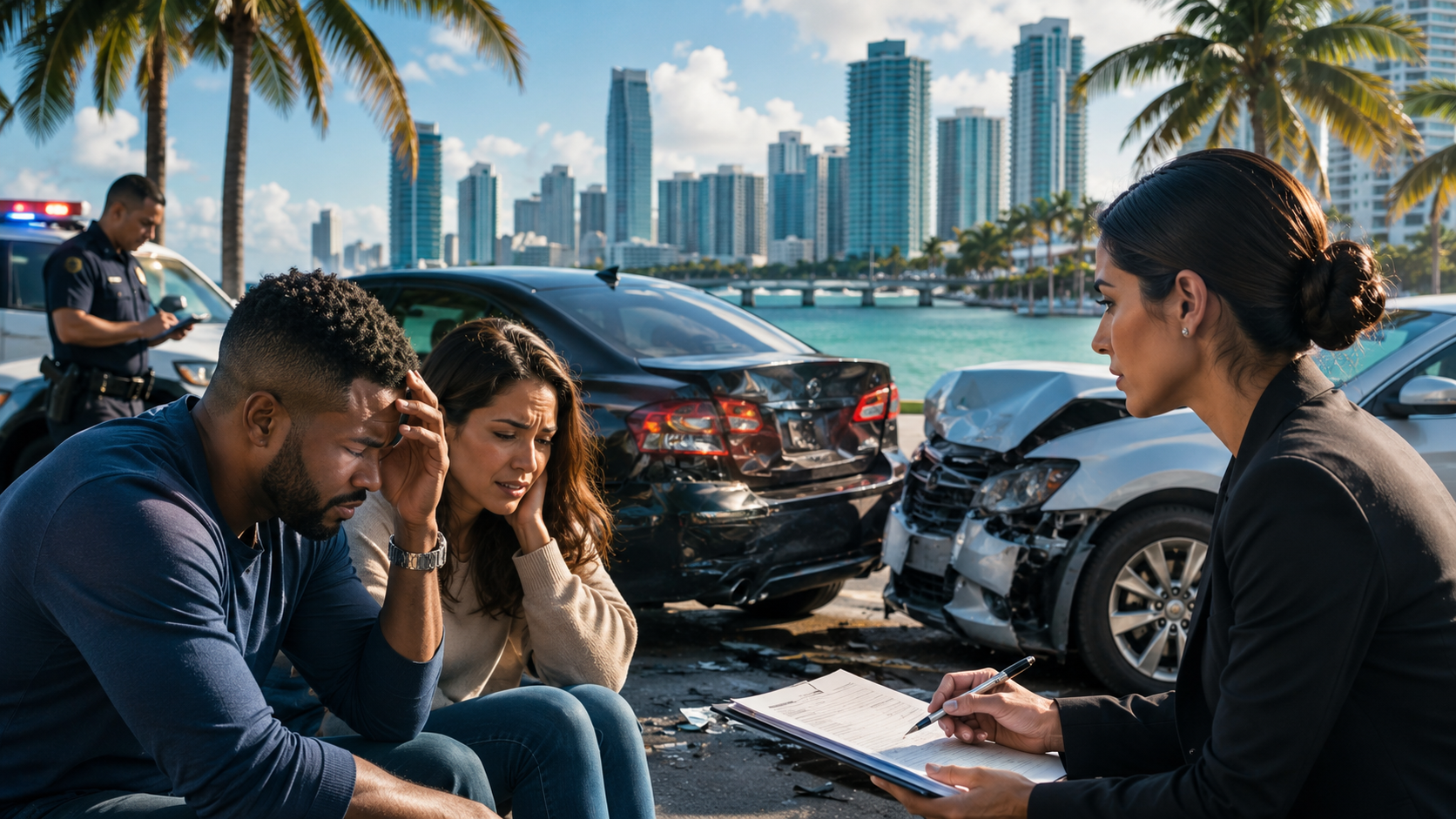
An auto accident on the bustling highways of Miami—whether it is a high-speed collision on I-95, a sudden multi-car backup on the Palmetto Expressway, or a distracted driving crash on Biscayne Boulevard—shatters your sense of security in milliseconds. In the immediate aftermath, emergency responders rush to the scene, sirens wail, and medical professionals focus entirely on what they can see: bleeding lacerations, compound fractures, torn ligaments, and visible trauma.
Yet, once the sirens fade and the adrenaline wears off, a different kind of battle begins. Long after casts are removed and surgical incisions heal, millions of car crash survivors grapple with invisible injuries that rarely receive the immediate attention they deserve. Emotional trauma, anxiety, depression, and Post-Traumatic Stress Disorder (PTSD) can be just as debilitating—and sometimes far more enduring—than physical fractures.
At Lett Law Firm, led by Founding Attorney Ariel Lett, Esq., we believe that principled advocacy requires looking at the whole person. Serving Miami and the South Florida region, our practice is built on standing up for "The People" against powerful corporate entities and insurance companies that routinely attempt to dismiss psychological suffering as "imaginary" or "exaggerated." Understanding the validity and gravity of emotional trauma is the first step toward reclaiming your life, your mental well-being, and your rightful compensation.
The Reality of Post-Accident Psychological Harm
When people think of car crash injuries, they typically picture orthopedic damage. But the human brain and nervous system undergo a massive chemical and psychological shock during a violent collision. The sudden realization of impending danger triggers a flood of survival hormones—adrenaline and cortisol—that can permanently alter emotional regulation long after the wreckage has been cleared.
Beyond the Physical Scars
Medical science confirms that psychological trauma leaves tangible, physiological imprints on the brain. When a victim survives a devastating crash, their brain’s amygdala (the emotional and threat-detection center) can become stuck in an active, hyper-vigilant state. This manifests in diverse, disruptive ways:
- Chronic Hypervigilance: Constantly scanning the road, flinching at minor sounds, or experiencing a racing heart whenever passing the location of the accident.
- Intrusive Thoughts and Flashbacks: Reliving the crash vividly through daytime memories or sudden panic attacks.
- Sleep Disturbances and Nightmares: Suffering from chronic insomnia or waking up drenched in sweat from dreams replaying the impact.
- Avoidance Behaviors: Refusing to drive, refusing to get into the passenger seat of a car, or experiencing severe anxiety when traveling across Miami bridges and overpasses.
The Misconception of "Just Getting Over It"
Society often places an unfair, toxic expectation on accident survivors to "shake it off" once their physical injuries mend. Friends, family, and—most detrimentally—insurance adjusters often ask, "Well, your car is fixed and your arm healed, so why are you still stressed?" This lack of empathy compounds the emotional injury, leaving victims feeling isolated, misunderstood, and helpless. Emotional trauma is not a sign of weakness; it is a normal human reaction to an abnormal, life-threatening event.
How Insurance Companies Minimize Emotional Detriment
If emotional trauma is so profound, why do so many car crash victims struggle to recover compensation for it? The answer lies in the profit-driven motives of insurance corporations. Insurance adjusters are trained professionals whose primary objective is to minimize payouts and protect their corporate bottom lines. When faced with claims of emotional distress, they deploy specific strategies to devalue your suffering.
The Challenge of Proving the Invisible
Unlike a broken bone visible on an X-ray or a herniated disc documented by an MRI, emotional trauma does not show up on standard imaging scans. Insurance companies exploit this fact. They argue that because there is no mechanical photograph of psychological pain, the injury does not exist or is grossly exaggerated.
Exploiting the Vulnerability Gap
In the days immediately following a Miami car crash, victims are often in a state of shock, heavily medicated, and financially panicked over mounting medical bills. Insurance adjusters take advantage of this vulnerability by pushing for quick, recorded statements or offering lowball early settlements. They hope to settle the claim cheaply before the victim fully realizes the long-term psychological fallout of the collision.
Before founding Lett Law Firm, Mr. Lett practiced at both large and small defense firms. This extensive background provided him with an insider’s view of how insurance companies think, operate, and strategize to deny psychological and non-economic damages. Having worked on the other side of the courtroom, he knows exactly how to dismantle bad-faith arguments and force insurance carriers to account for the full, holistic impact of an accident.
The Judicial Perspective: Why Elite Preparation Matters
Navigating a personal injury claim that involves severe emotional detriment requires more than standard legal paperwork; it demands rigorous evidence and trial-ready precision.
Leveraging Federal Court Experience
Mr. Lett’s elite legal background—including serving as a federal law clerk for the U.S. District Court for the Southern District of Florida under the Honorable Darrin P. Gayles—gives Lett Law Firm a distinct competitive edge. Having drafted substantive legal orders and opinions on complex civil matters, Mr. Lett possesses a profound understanding of how judges and juries evaluate evidence, testimony, and legal arguments regarding non-economic damages (pain, suffering, and mental anguish).
Building a Bulletproof Case for Mental Anguish
To secure maximum compensation for emotional trauma, an attorney must build a comprehensive evidentiary record. This involves:
- Professional Psychological Documentation: Partnering with licensed therapists, psychiatrists, and counselors who can officially diagnose PTSD, anxiety, or depression stemming directly from the crash.
- Detailed Daily Impact Journals: Helping clients document their day-to-day struggles, panic attacks, lost sleep, and altered family dynamics.
- Corroborating Testimony: Gathering statements from family members, coworkers, and friends who witness firsthand how the accident has changed the victim's personality, confidence, and joy of life.
Insurance companies change their tune rapidly when they realize they are facing a litigator who understands both the insurance playbook and judicial standards inside and out.
The "Education-First" Philosophy: LETT US FIGHT FOR YOU
Legal battles following a severe trauma are notoriously stressful, often compounding psychological wounds with overwhelming anxiety about the legal process itself. Too many traditional law firms treat clients as transactional file numbers, leaving them in the dark about case timelines, legal strategies, and what to expect next.
Lett Law Firm rejects this impersonal model entirely through its signature "LETT US FIGHT FOR YOU" approach. We believe that client education is the most powerful antidote to fear and post-accident uncertainty. Throughout every step of your litigation, our firm provides transparent, step-by-step guidance. By demystifying the legal process, explaining how non-economic damages are calculated, and connecting clients with trusted medical and mental health professionals, we help mitigate the emotional and financial hardships of recovery.
This commitment to principled advocacy and client empowerment has earned Lett Law Firm a reputation as one of the most trusted Black-owned law practices in Florida. Whether you are dealing with catastrophic personal injury, criminal defense matters, or civil rights violations, our firm combines the technical rigor of a high-level federal practitioner with the deep-rooted compassion of a community-focused advocate.
Take Control of Your Recovery Today
If you or a loved one has suffered physical injuries and persistent emotional trauma following a car crash in Miami or across South Florida, do not let insurance companies minimize your pain. You deserve an advocate who sees the whole picture—both the physical scars and the invisible wounds.
Partner with a legal team that possesses the insider knowledge, federal court experience, and unwavering commitment to stand up for your rights. Let Lett Law Firm put its award-winning advocacy to work for you. Contact us today to schedule your consultation and take the first step toward reclaiming your peace of mind.
Lett Law Firm Blog